
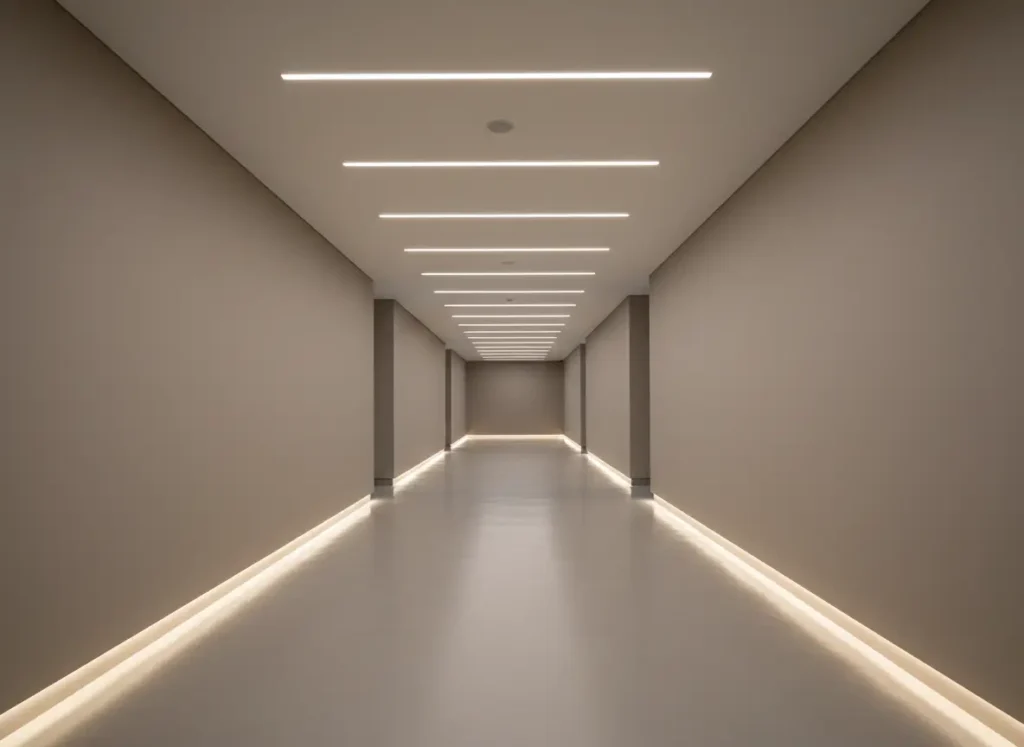
Stretch ceiling installation follows a structured process that allows clean ceilings to be installed without heavy construction work.
The system uses a perimeter frame and a flexible membrane that is stretched into place to create a perfectly smooth ceiling surface.
Compared with traditional ceilings, installation is faster and produces very little dust or construction waste.
To understand the materials used in the system, you can explore the different Stretch Ceiling Types.
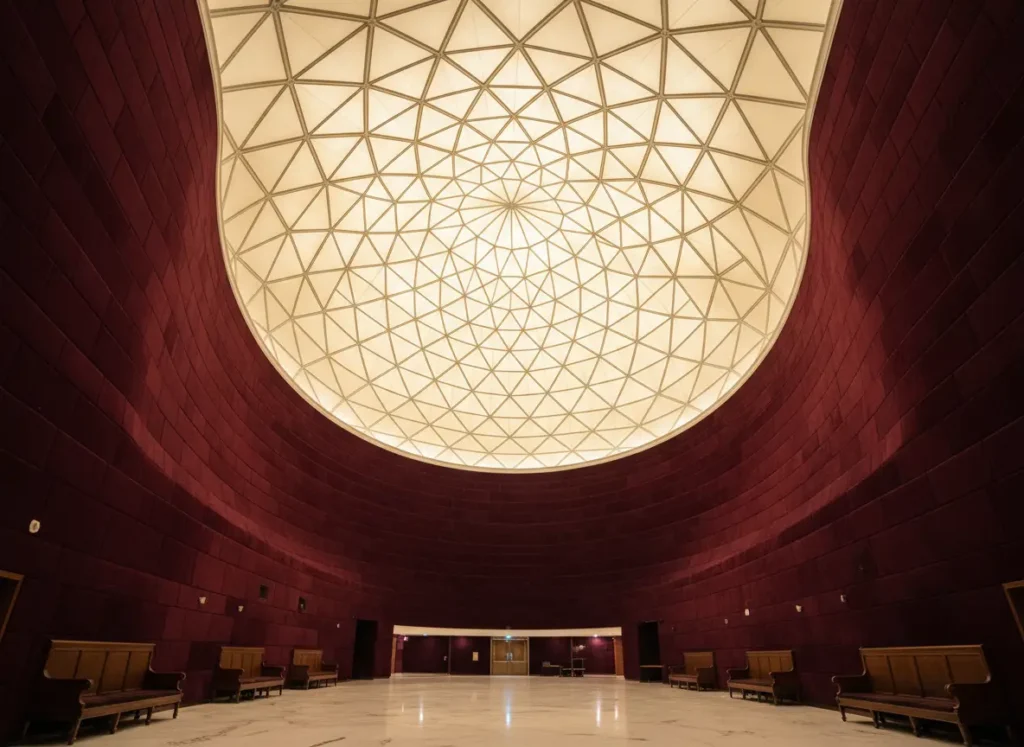
Every installation begins with a project evaluation. Ceiling dimensions, lighting positions, and structural elements are reviewed before installation begins.
This preparation ensures the correct materials and layout are used for the project.
Advantage: careful planning helps ensure the final ceiling surface remains smooth and properly aligned.
A lightweight perimeter frame is installed along the walls or structural supports. This frame will hold the stretch ceiling membrane once it is placed.
The frame follows the exact shape of the room and determines the final ceiling height.
Advantage: the frame system allows precise installation without major structural modifications.
Before installing the membrane, lighting systems, cables, ventilation openings, and other ceiling elements are prepared.
This stage ensures that spotlights, LED strips, or backlit panels can be integrated into the final ceiling.
Advantage: lighting can be fully integrated into the stretch ceiling design.
The stretch ceiling membrane is carefully heated and stretched across the frame system. The material becomes flexible during installation and locks securely into the perimeter track.
Once installed, the membrane forms a perfectly smooth ceiling surface.
Advantage: the installation process creates seamless ceilings with no visible joints.
After the membrane is installed, lighting fixtures, vents, and technical elements are carefully integrated into the ceiling.
Special reinforcement rings ensure fixtures remain stable while protecting the membrane.
Advantage: integrated lighting allows modern and creative ceiling designs.
The final stage includes checking the membrane tension, lighting installations, and finishing details.
Once the inspection is complete, the ceiling surface is clean, smooth, and ready for use.
Advantage: the installation process produces minimal dust and disruption compared to traditional ceiling construction.
Stretch ceiling installation is usually faster than traditional ceiling systems.
Small residential spaces may be completed within a single day, while larger commercial environments may require several days depending on the complexity of the design.
Because the system produces minimal dust, it is often installed in spaces that remain occupied during renovation projects.
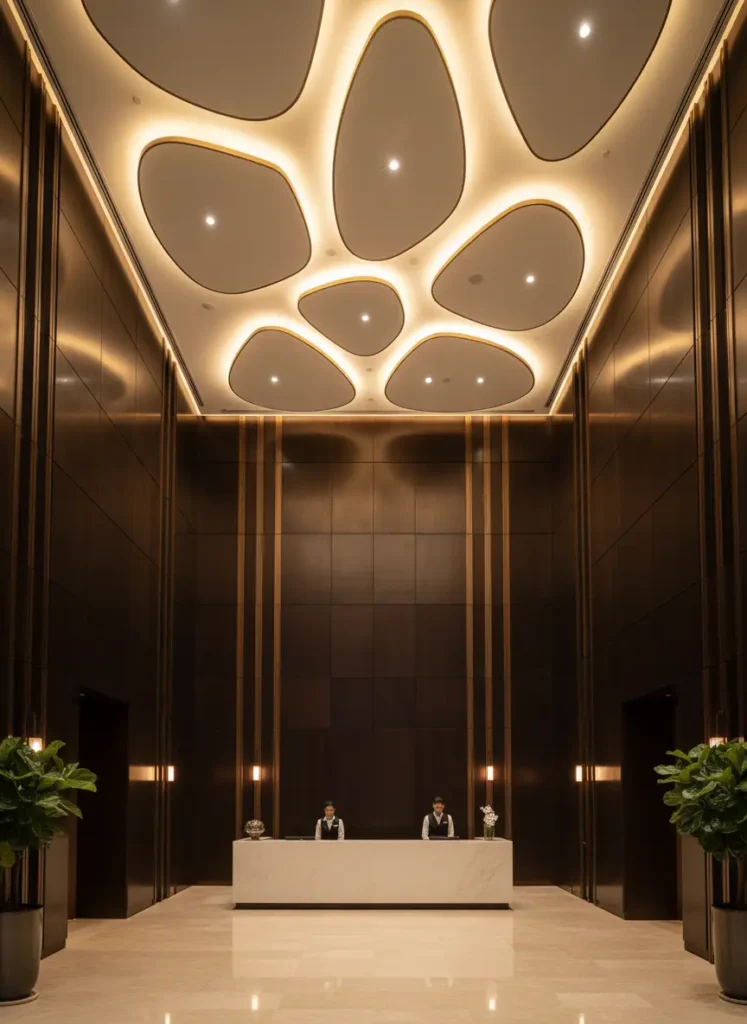
Stretch ceilings are designed to simplify ceiling installation while offering modern design flexibility.
The system avoids heavy construction work, reduces installation time, and allows lighting integration directly into the ceiling surface.
These advantages make stretch ceilings suitable for residential interiors, commercial environments, and large architectural spaces.
Understanding the installation process helps you plan your ceiling design and project timeline.
Our team can help you select the right stretch ceiling system for your space.