
From small interiors to large developments, Fidelio Solutions supplies stretch ceiling systems worldwide for residential and commercial applications.
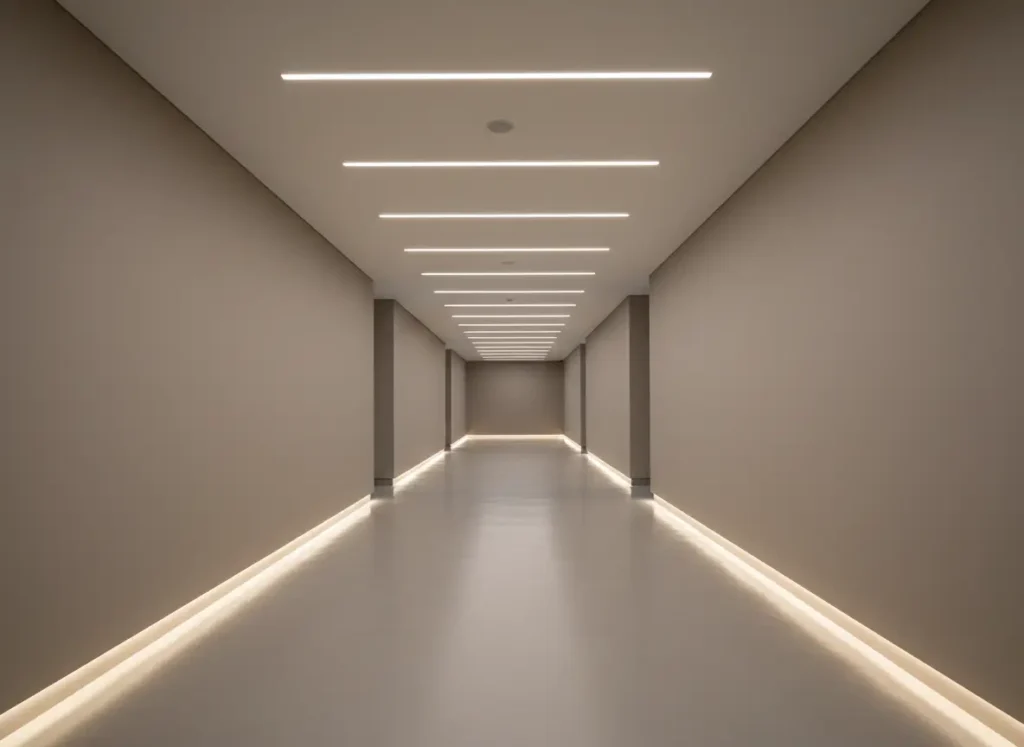
Stretch ceilings come in several finishes and materials. Each type creates a different visual effect and serves different functional purposes.
Some ceilings reflect light and create depth. Others provide soft matte finishes, acoustic performance, or illuminated surfaces.
Understanding the available stretch ceiling types helps you select the right ceiling system for your project.
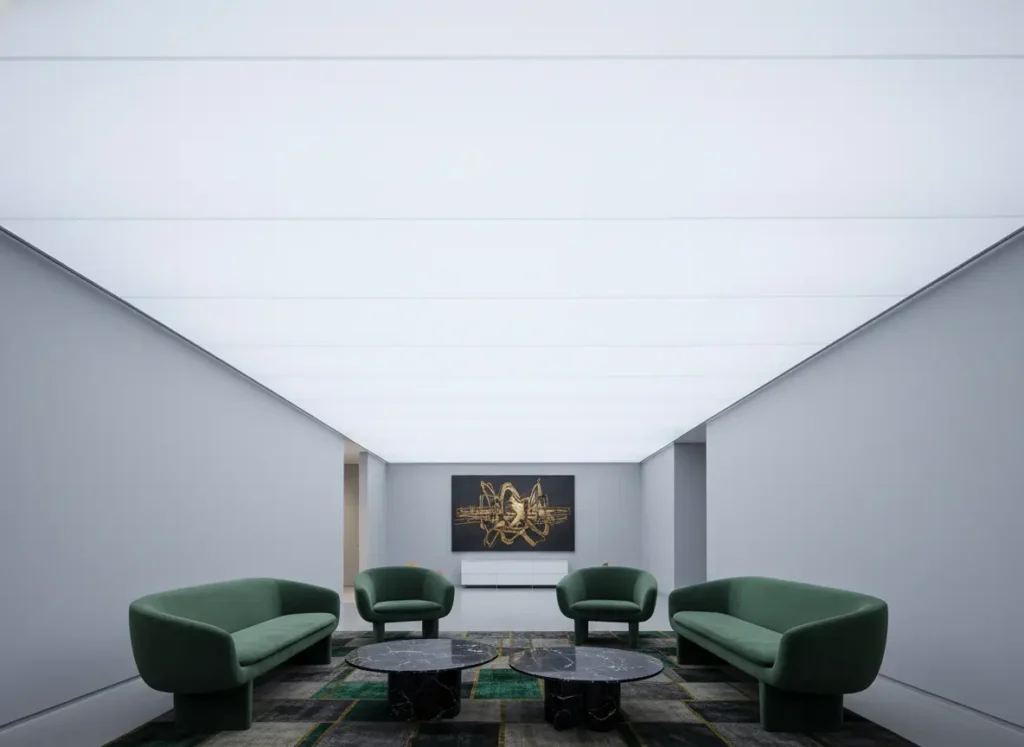
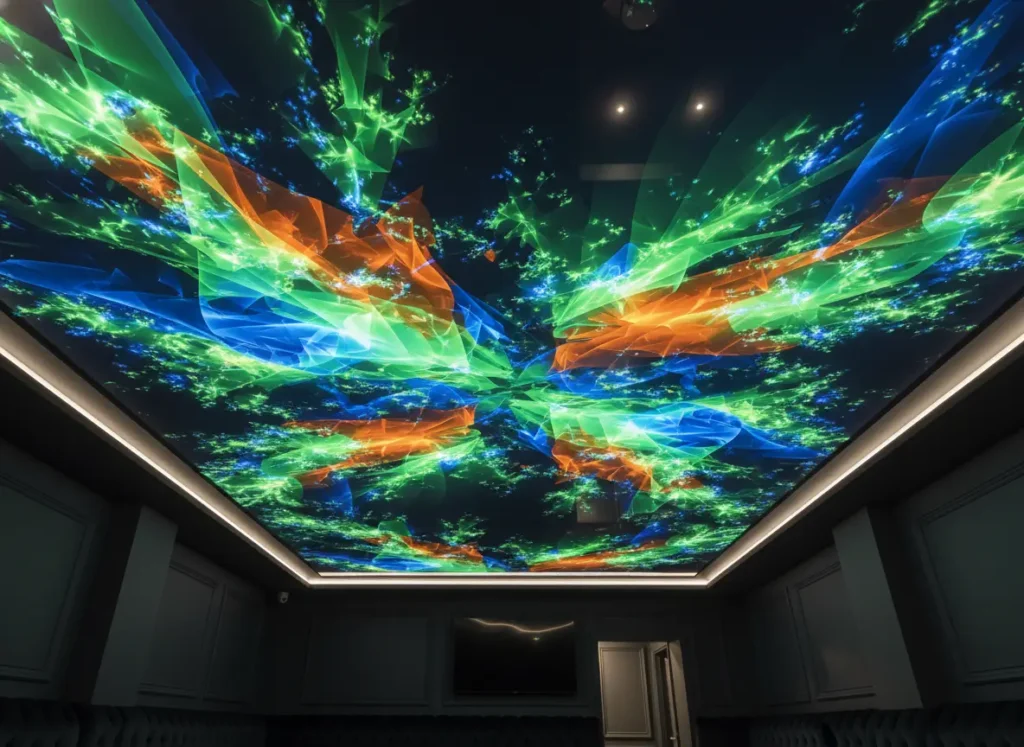
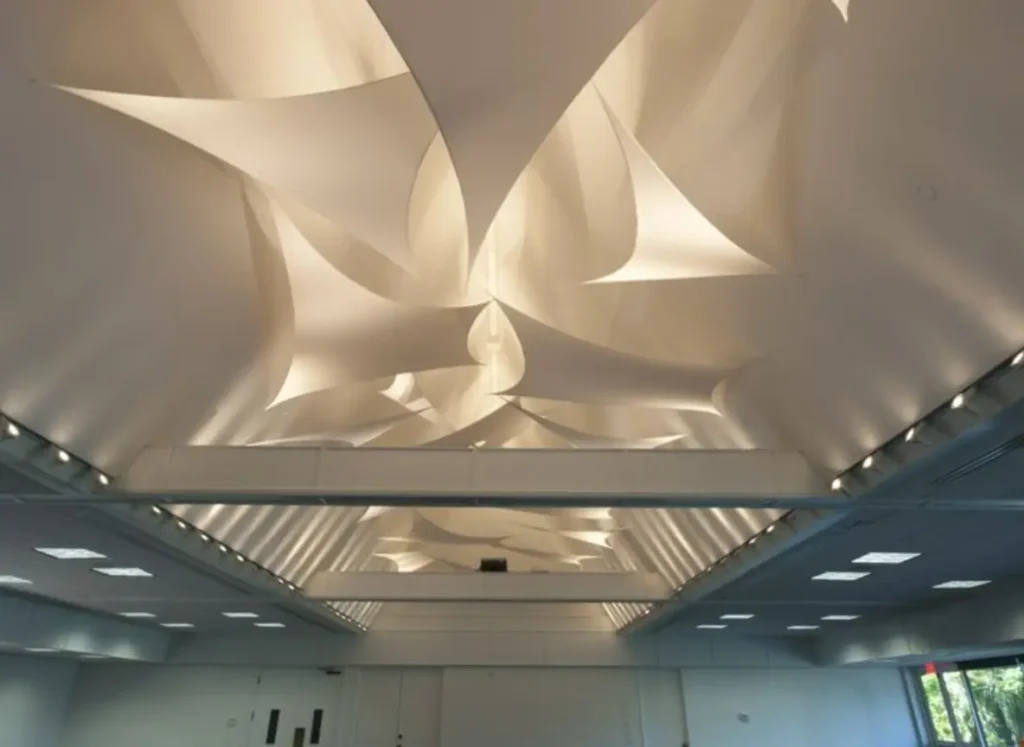
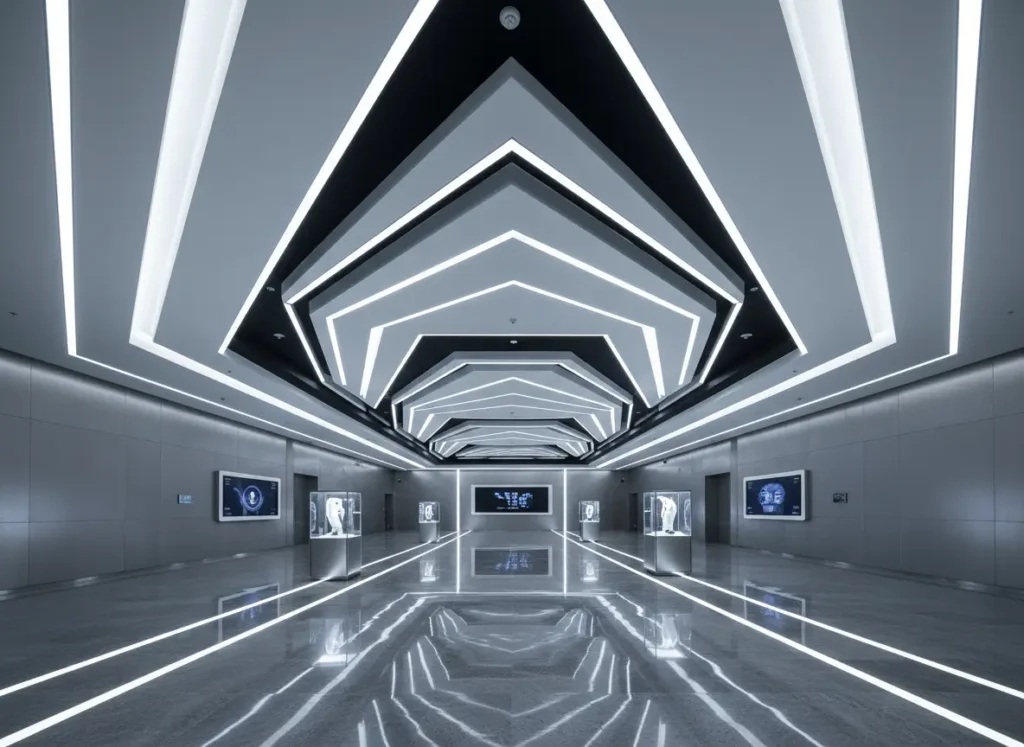
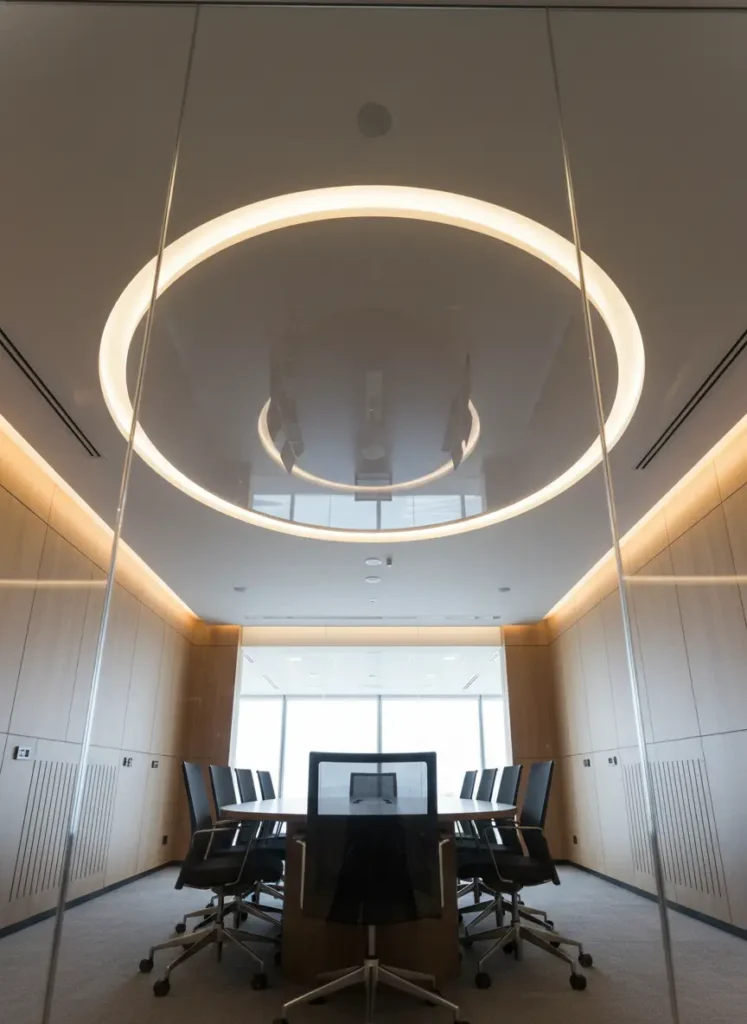
Overview of available stretch ceiling finishes
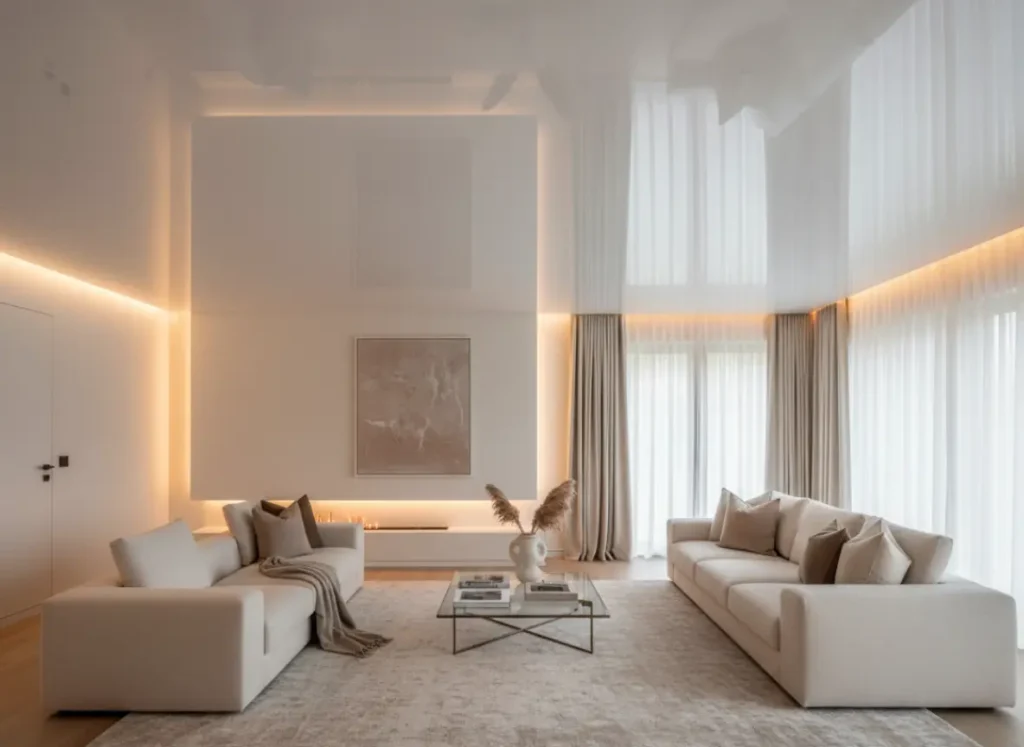
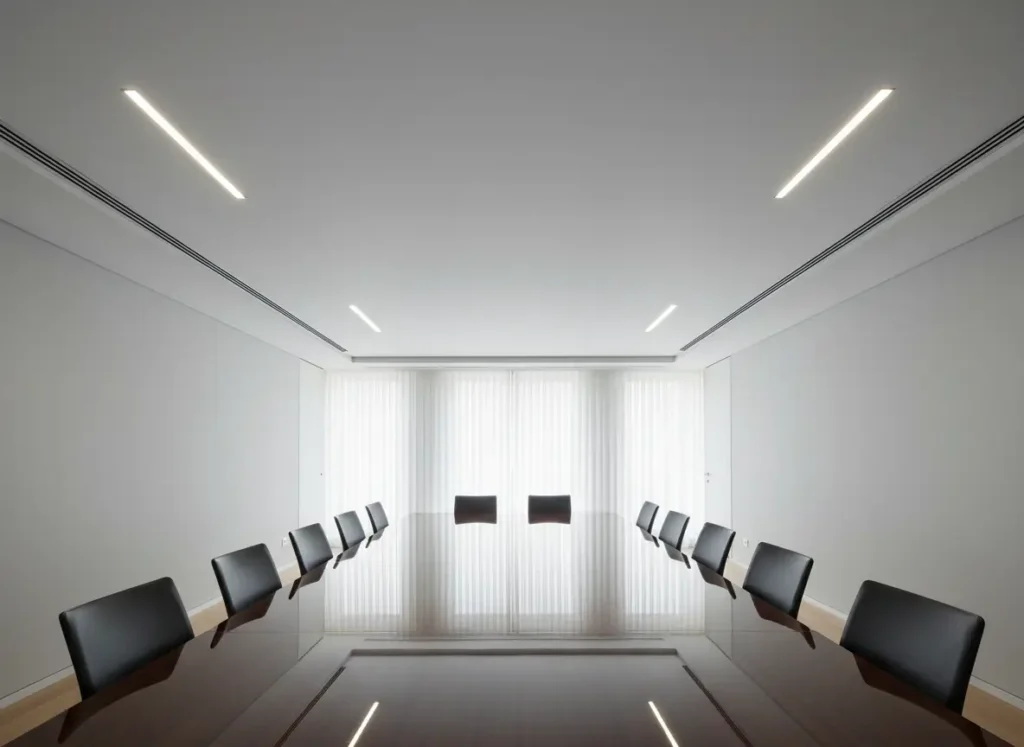
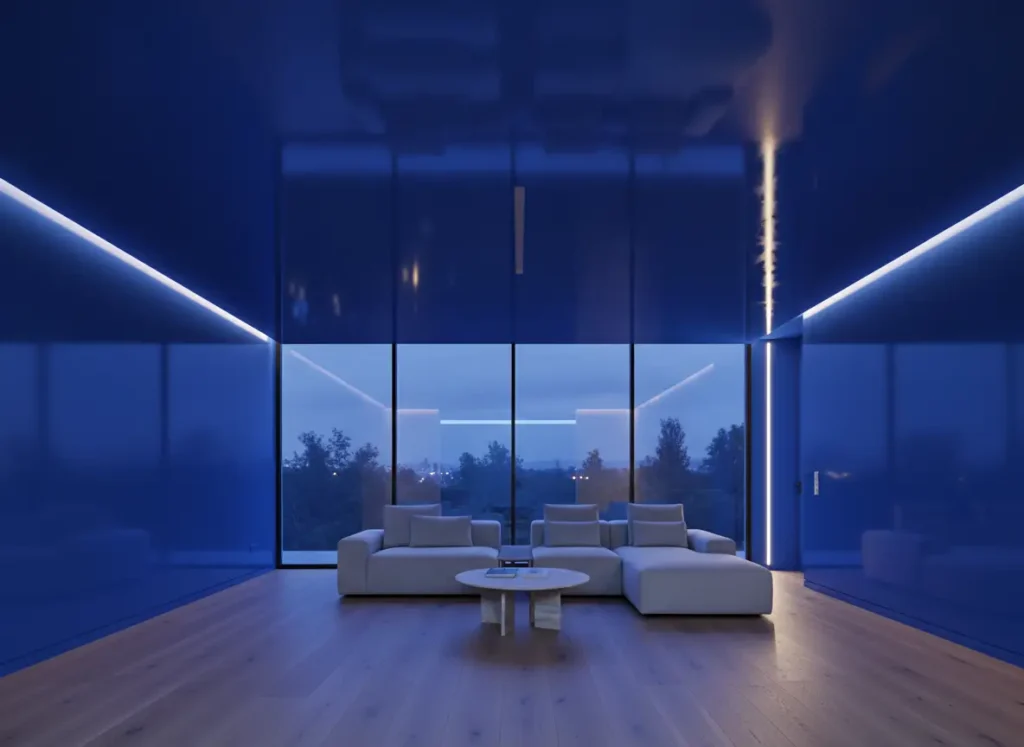
The most common stretch ceiling types include glossy, matte, satin, translucent, printed, fabric, and PVC ceilings. Each type offers a different finish and visual effect depending on the interior design and lighting requirements.
Understanding reflective and non-reflective finishes
Glossy stretch ceilings have a reflective surface that creates depth and brightness. Matte stretch ceilings have a non-reflective finish that resembles a traditional painted ceiling.
Comparing two common stretch ceiling materials
Fabric stretch ceilings are often used for acoustic performance and breathable installations. PVC stretch ceilings are more common because they are flexible, durable, and available in many finishes.
Choosing finishes for homes and apartments
Matte and satin stretch ceilings are commonly used in residential interiors because they provide a clean and natural appearance that fits most design styles.
Lighting systems compatible with stretch ceilings
Yes. Many stretch ceiling systems allow integrated lighting solutions such as LED strips, spotlights, or backlit translucent ceilings.
Stretch ceilings in humid environments
Yes. PVC stretch ceilings are resistant to moisture and are commonly installed in kitchens, bathrooms, and other humid environments.