In many projects, glossy stretch ceilings look impressive at first. But only some actually work long term. The difference is not the material. It is how the ceiling, lighting, and room are planned together. A well-executed glossy ceiling can make a space feel larger and sharper. A poorly planned one will highlight every flaw. If you already have a project in mind, you can discuss your project and get clear guidance before making decisions.
What glossy stretch ceilings are?
Glossy stretch ceilings are tensioned ceiling membranes with a shiny finish. They are fixed to a perimeter profile and stretched below the original ceiling to create a smooth, reflective surface.
Glossy stretch ceilings are reflective ceiling systems made from a stretched membrane, usually PVC, installed below the base ceiling to create a mirror-like surface that enhances light and depth.
They are often used when a client wants a clean finish without rebuilding the base ceiling. They also hide uneven concrete, stains, wiring, and structural defects that would otherwise require heavy work.
How glossy stretch ceilings work?
The system is based on a perimeter fixing profile and a custom-cut membrane. The profile is installed around the room, and the membrane is stretched into place using controlled heat to achieve a flat and uniform surface.
Because the membrane sits below the slab, the space above becomes usable for lighting, wiring, speakers, and ventilation. This stage needs to be planned carefully, because poor positioning will show once the reflective surface is in place.
How do glossy stretch ceilings work?
They create a smooth reflective ceiling by stretching a membrane across a fixed perimeter frame below the original ceiling.
Why the glossy finish changes a room so much?
Glossy stretch ceilings reflect both light and objects. That changes the perception of space. The ceiling becomes part of the room instead of just sitting above it.
Glossy stretch ceilings can help:
- reflect natural and artificial light
- make small rooms feel larger
- create a sharper and more controlled finish
- highlight lighting features
- add depth without adding elements
But this only works when the room is controlled. If the layout is messy or the lighting is wrong, the ceiling will amplify that.
Best rooms to use them in
Glossy stretch ceilings work best where reflection adds clarity, not noise.
They are strong in:
- living rooms with structured layouts
- dining areas with controlled lighting
- kitchens with modern finishes
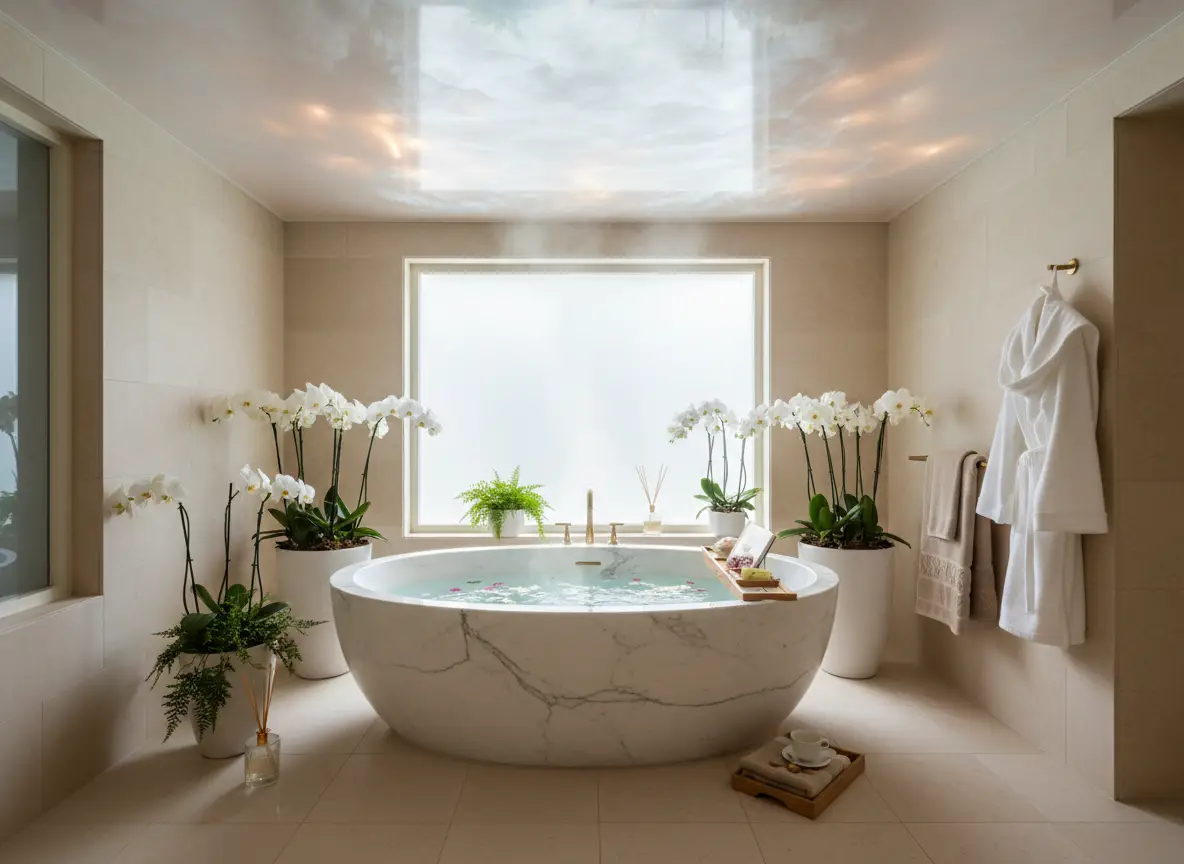
- bathrooms where moisture resistance matters
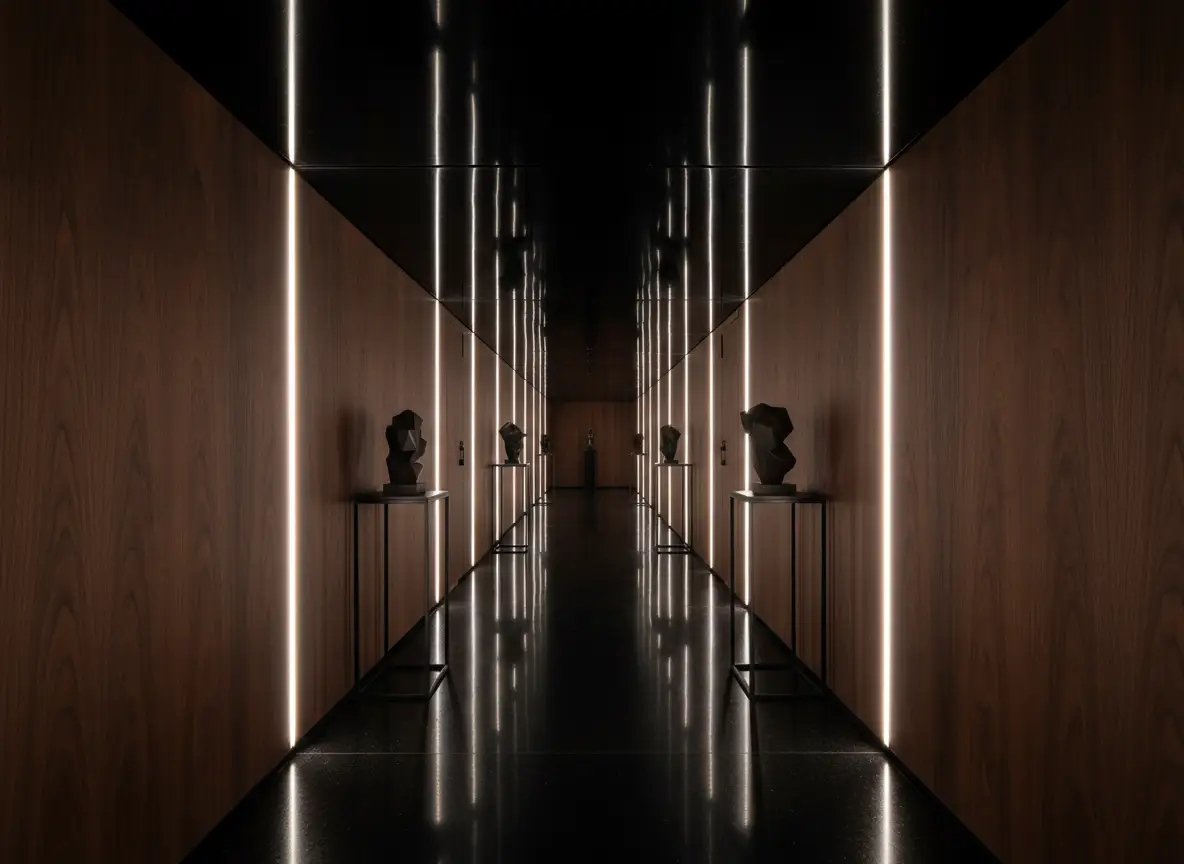
- hallways that need more depth
- reception areas and commercial environments
In residential projects, they perform best when the furniture and lighting are intentional. In commercial spaces, they are often used to create a strong first impression.
Benefits that matter in real projects
Beyond appearance, glossy stretch ceilings solve practical problems.
They:
- hide damaged or uneven base ceilings
- reduce the need for plaster and repainting
- allow clean integration of lighting
- create a consistent surface without defects
- install faster than traditional ceiling systems
They also reduce long-term maintenance. No repainting cycles. No visible cracks. No patch repairs.
This makes them useful in both residential and commercial environments where consistency matters over time.
If you are comparing finishes before committing, take time to compare ceiling types so you choose based on real use, not just appearance.
When glossy stretch ceilings look cheap vs high-end
This is where most people get it wrong.
The same material can look premium in one space and cheap in another.
Cheap results usually come from:
- poor lighting placement
- too many reflections competing in the room
- dark gloss used in tight spaces
- low ceilings with heavy finishes
- weak installation detailing
High-end results come from:
- controlled lighting design
- balanced materials and colours
- correct ceiling height and proportions
- simple, structured layouts
- precise installation
The difference is control. Glossy ceilings need discipline. Without it, the reflection becomes a problem instead of a feature.
Limits and mistakes to think about before choosing one
Glossy stretch ceilings will not fix poor design. They will expose it.
Common mistakes include:
- using gloss in cluttered spaces
- placing lighting without checking reflections
- choosing strong colours without balance
- expecting the ceiling to fix the room on its own
- deciding too early before the design is defined
Reflection distortion can also happen in long or narrow rooms. Without balance, proportions can feel exaggerated.
This is where planning matters. Not after installation. Before.
Glossy vs matte vs satin stretch ceilings
Choosing the right finish is critical.
| Finish | Visual effect | Best for | Watch-out |
|---|---|---|---|
| Glossy | Mirror-like, high reflection | Small rooms, feature spaces, modern interiors | Shows clutter and lighting mistakes |
| Matte | Soft, non-reflective | Bedrooms, calm interiors | Less visual impact |
| Satin | Light reflection, balanced | Residential and mixed-use | Less dramatic than gloss |
Glossy is the most demanding but also the most impactful. Matte is safer. Satin is a balanced option.
Lighting design with glossy stretch ceilings
Lighting is the most important factor.
A glossy ceiling reflects everything. That includes position, angle, and intensity.
What works:
- linear LED lighting
- hidden cove lighting
- controlled pendant fixtures
- limited and well-placed spotlights
What fails:
- too many spotlights
- poor alignment
- uneven light distribution
- cold lighting on dark surfaces
A common issue is glare caused by bad positioning. Instead of clean reflections, the ceiling becomes visually noisy.
This is why lighting must be planned before installation.
Room-by-room design guidance
In living rooms, lighter gloss keeps the space open. Dark finishes require stronger control.
In kitchens, light gloss works well with task lighting and modern surfaces. Dark gloss needs careful balance.
In bathrooms, glossy ceilings perform well due to moisture resistance and clean finish.
In bedrooms, it depends on preference. Some want a bold effect. Others prefer softer finishes.
In hallways, glossy ceilings add depth and improve narrow proportions. In commercial interiors, darker tones can create a premium feel when used correctly.
Maintenance, durability, and day-to-day care
Glossy stretch ceilings are low maintenance but require proper care.
They:
- do not need repainting
- resist cracking and peeling
- maintain a consistent finish
Care includes:
- using soft cloths
- using correct cleaning products
- avoiding abrasive materials
In commercial spaces, poor cleaning can leave marks that reduce the overall effect.
Durability depends on installation quality and environment. A properly installed ceiling will stay consistent for years.
Is a glossy stretch ceiling right for your project?
This is the key decision.
Glossy stretch ceilings are suitable when:
- the room needs to feel larger
- lighting is part of the design
- the base ceiling is not usable
- the layout is clean and controlled
- a modern finish is required
They are not suitable when:
- the space is cluttered
- lighting is not planned
- a calm atmosphere is required
- the design is still unclear
Most problems happen when the decision is made too early.
Are glossy stretch ceilings the right choice for your space?
Glossy stretch ceilings can completely transform a room. They can improve light, hide defects, and create a sharp finish. But they only work when the design supports them.
The key is not whether they look good in general. The key is whether they fit your space, your lighting, and your layout.
This is what we review in every project. Ceiling, lighting, and room design are always considered together before installation.
If you want to see how this works in real projects, review real projects and understand what delivers a clean result. If you are unsure about your own space, it is always better to get clarity before making a final decision.
FAQ
What are glossy stretch ceilings made of?
They are usually made from a stretched membrane with a glossy finish, often PVC-based, installed below the original ceiling on a perimeter profile.
Are glossy stretch ceilings good for small rooms?
Yes. They reflect light and room shapes, which can make a small room feel larger and brighter when the design is balanced.
Do glossy stretch ceilings work in bathrooms?
Yes. They are often a good option for bathrooms and spa-style spaces because they handle moisture better than many painted ceiling finishes.
Are glossy stretch ceilings hard to maintain?
Not usually. They need proper cleaning with suitable products and soft cloths, but they do not require repainting like traditional ceilings.
What is the difference between glossy and matte stretch ceilings?
Glossy finishes reflect light and create a mirror effect. Matte finishes are softer, calmer, and non-reflective. Satin sits between the two.
Can lights be integrated into glossy stretch ceilings?
Yes. Spotlights, LED strips, cove lighting, and statement fixtures can all be planned with the system. Lighting should always be designed carefully because the ceiling reflects it.
Are glossy stretch ceilings suitable for bedrooms?
They can be, but not always. Some people like the dramatic look. Others prefer a softer matte or satin finish for a more restful feel.